
I spent three weeks in India on vacation. When I returned to work, something surprised me.
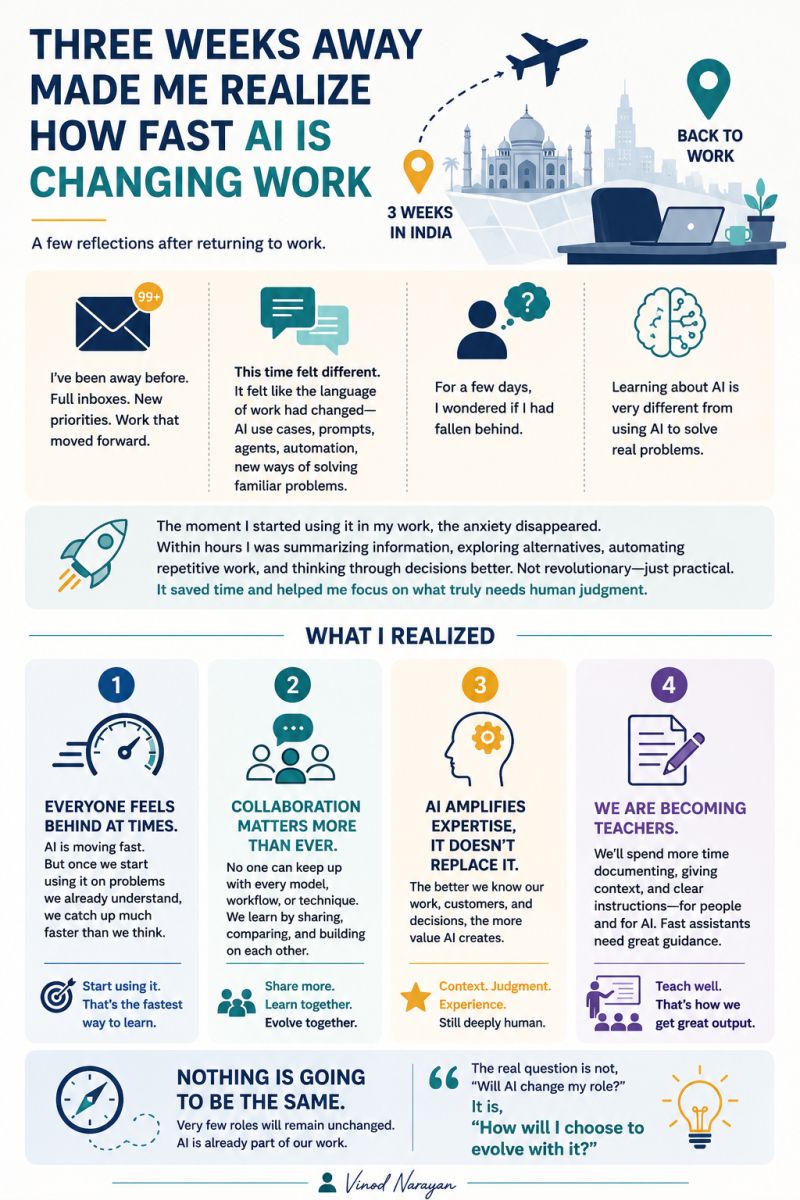
I’ve been away from work before. I’ve come back to overflowing inboxes, new priorities, and projects that had moved forward without me. This time felt different. It wasn’t the volume of work that caught my attention. It felt as though the language of work itself had changed. Conversations were filled with AI use cases, prompts, agents, automation, and entirely new ways of approaching familiar problems.
For the first few days, I found myself wondering whether I had fallen behind.
That feeling surprised me because I hadn’t ignored AI. Like many people, I had been reading about it, taking courses, experimenting with different tools, and trying to understand where everything was heading. But I realized something important. Learning about AI is very different from using AI to solve real problems.
The moment I started using it intentionally in my own work, the anxiety began to disappear. Within a few hours, I was using it to summarize information, explore alternatives, automate repetitive tasks, and think through decisions more effectively. Nothing revolutionary. Just practical work that saved time and helped me focus on the parts of my job where human judgment mattered most.
This experience left me with a few reflections.
First, almost everyone feels behind right now. AI is moving so quickly that it’s easy to believe everyone else has figured it out. My experience was the opposite. Once we begin using it on problems we already understand, we catch up much faster than we expect.
Second, AI doesn’t reduce the importance of people. It increases it. None of us can keep up with every new model, workflow, or technique on our own. Sharing ideas, learning from colleagues, and collaborating become even more valuable because the technology is evolving faster than any individual can.
Finally, AI seems to amplify expertise more than replace it. The better we understand our work, the more value we get from AI. Context, experience, judgment, and asking better questions remain deeply human strengths. AI makes some parts of work faster, but it also makes our human contribution more important.
I also wonder whether one of the most valuable skills of the future will be teaching. We will spend more time documenting knowledge, providing context, and giving clear instructions—not only for other people but also for AI. In many ways, we are becoming teachers to incredibly fast assistants. What they produce still depends on the quality of our guidance.
I don’t know exactly what work will look like a few years from now. But I left my first week back with one clear thought. The question is no longer, “Will AI change my role?” The better question is, “How will I choose to evolve with it?”


Leave a Reply