
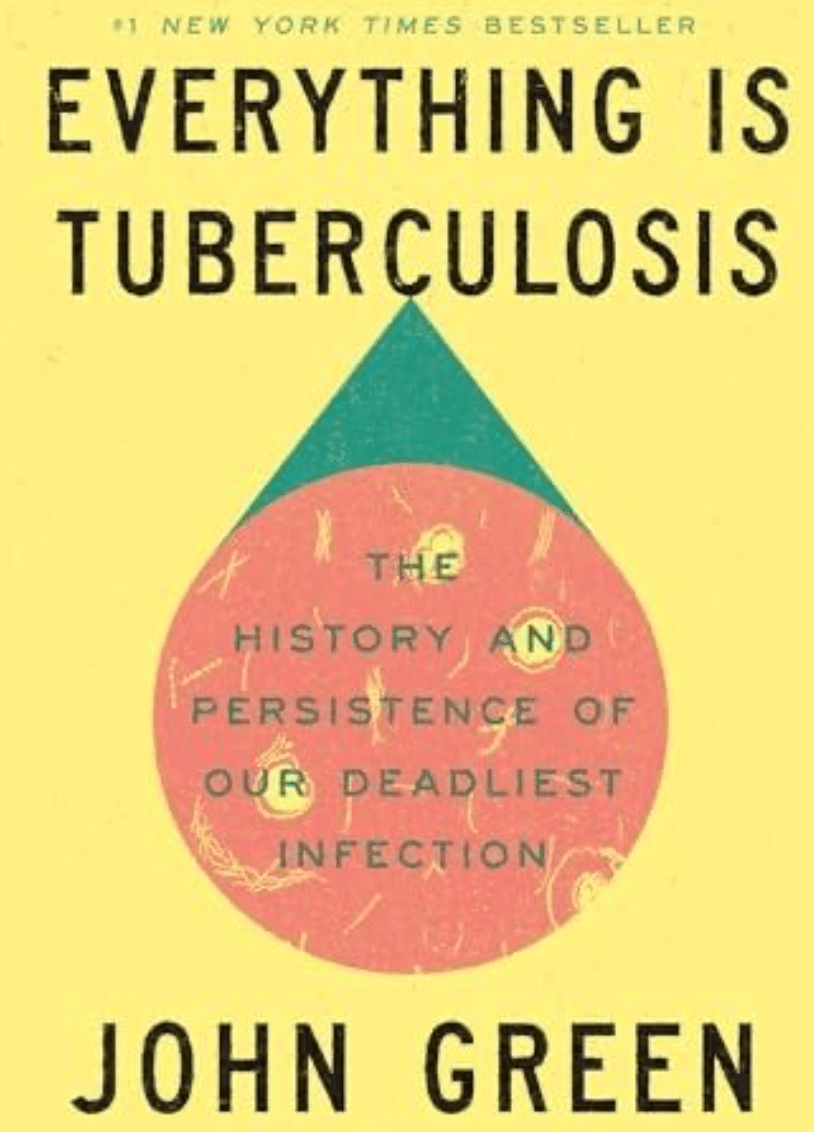
A few months ago, I listened to a podcast featuring John Green, where he spoke about his new book Everything Is Tuberculosis.
My first reaction was an almost reflexive one: “Really? TB? Even now?”
Like many of us, I’ve heard stories of tuberculosis somewhere in my family tree, distant, almost archival. For years, I hadn’t heard anyone in my immediate circles talk about TB. And that silence fooled me. Not because TB had disappeared, but because it had disappeared from my world.
That is what made this book such an eye-opener.
I hadn’t stopped hearing about TB because it was no longer a problem. I stopped hearing about it because of privilege. After finishing the book, I looked up the numbers and I’d urge you to do the same. See where TB cases are concentrated. Notice the patterns. Sit with what that means.
As per WHO AN estimated 1.23 million people died of tuberculosis in 2024, even though TB is detectable and curable. Let that sink in. Curable does not mean cured. Known does not mean solved.
This book is not just about a disease. It’s about inequality. About moral failure. About how large populations suffer while others assume a problem no longer exists simply because it’s not visible to them. It’s about who gets to survive, and who gets forgotten.
TB should now be described as a disease of poverty but poverty itself is shaped by housing, economics, politics, and access. These are not accidents. They are outcomes. And many of these deaths are preventable.
When I closed the book, one question stayed with me. What is my moral responsibility?
I live in a place where TB is rare. I had assumed it belonged to the past. That assumption itself is part of the problem. For me, the responsibility begins with awareness. Seeing clearly, questioning my blind spots, and asking if there’s anything, however small, I can do.
I wouldn’t have asked that question if I hadn’t read this book. So, thank you, John Green for forcing me to look again, and look wider.
 Penpositive
Leave a comment